

Introduction
As businesses generate more data than ever before, the demand for faster and smarter decision-making is rapidly increasing. Traditional cloud-based artificial intelligence systems often struggle with latency, bandwidth limitations, and data privacy concerns. This is where Edge AI becomes a game-changing technology.
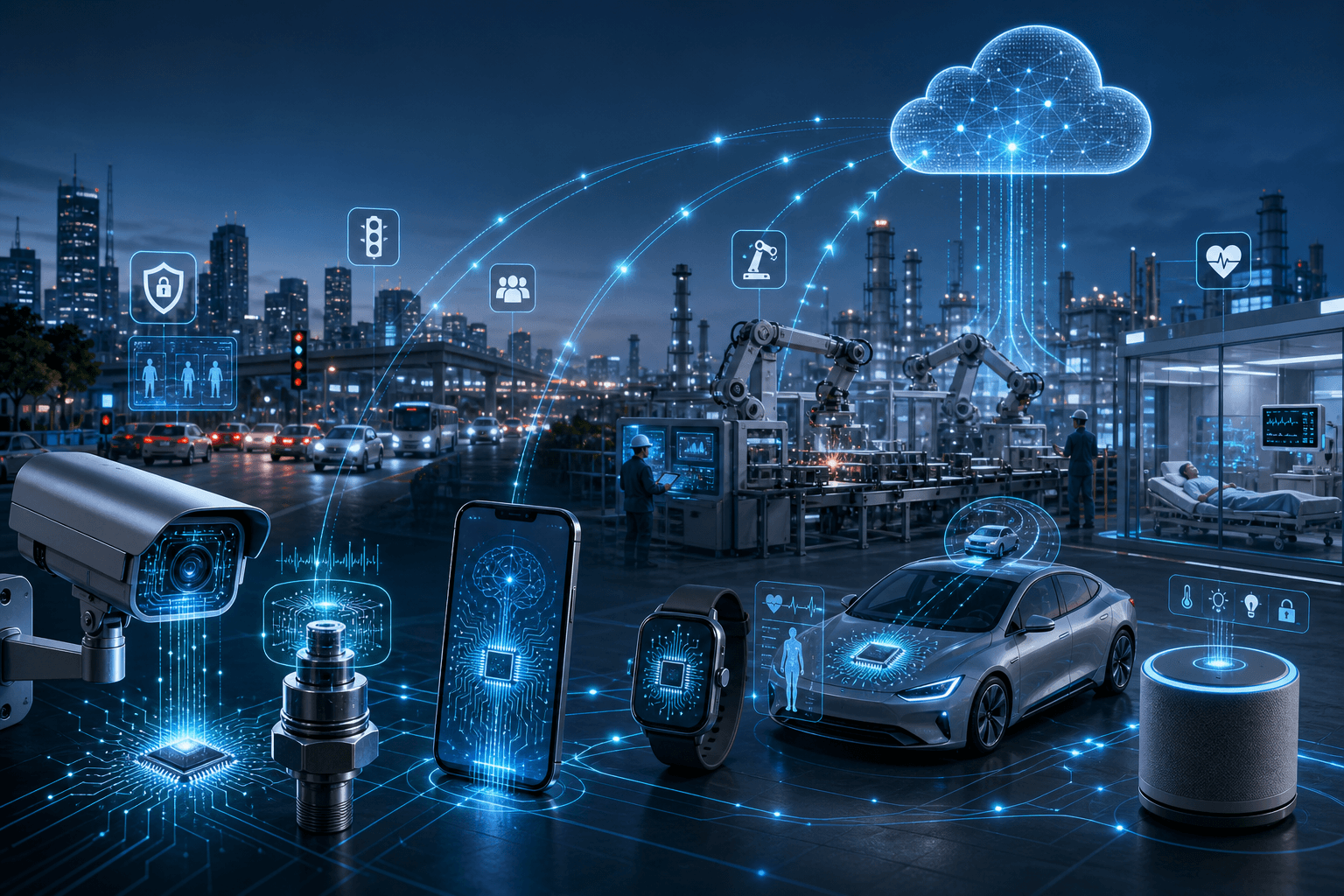
Edge AI allows data processing and artificial intelligence models to run directly on devices such as sensors, cameras, smartphones, and industrial machines. Instead of sending massive amounts of data to centralized cloud servers, Edge AI processes information locally at the source. This enables real-time decision-making, improved efficiency, and stronger data security.
With the rapid growth of IoT devices and smart systems, Edge AI is quickly becoming a critical component of modern digital infrastructure.
What is Edge AI?
Edge AI refers to the deployment of artificial intelligence algorithms directly on edge devices. These devices collect data and analyze it locally without needing to send every piece of information to the cloud.
By bringing AI closer to where data is generated, organizations can process information instantly and respond to events in real time.
Common edge devices include:
Smart security cameras
Industrial IoT sensors
Autonomous vehicles
Smartphones and wearable devices
Smart home assistants
These devices use optimized machine learning models designed to run on limited computing resources while still delivering powerful insights.
Why Edge AI Is Important for Real-Time Decision-Making
Edge AI plays a crucial role in applications that require instant responses and minimal delays. When data must travel to the cloud and back, the delay can affect performance and reliability.
Processing data locally at the edge helps solve this problem.
Reduced Latency
One of the biggest advantages of Edge AI is low latency. Since data is processed directly on the device, decisions can be made within milliseconds. This is essential for applications such as autonomous driving, smart surveillance, and industrial automation.
Improved Data Privacy
Edge AI enhances data security by keeping sensitive information on the device instead of sending it across networks. This is especially important for industries like healthcare, finance, and smart home technologies.
Lower Bandwidth Usage
Sending large amounts of data to the cloud requires significant network bandwidth. Edge AI reduces this load by analyzing data locally and sending only important insights to centralized systems.
Greater Reliability
Edge devices can continue to operate even when internet connectivity is unstable or unavailable. This makes Edge AI ideal for remote locations, manufacturing facilities, and mission-critical environments.

Key Benefits of Edge AI
Faster Data Processing
Edge AI enables devices to analyze and act on data instantly, improving system performance and user experience.
Cost Efficiency
By reducing the amount of data sent to cloud servers, organizations can lower cloud storage and network costs.
Scalable AI Deployment
Edge AI allows companies to deploy intelligent systems across thousands of devices without overwhelming centralized infrastructure.
Enhanced User Experience
Applications such as voice assistants, augmented reality, and smart devices benefit from faster responses and smoother interactions.
Real-World Applications of Edge AI
Edge AI is already transforming multiple industries by enabling faster insights and smarter automation.
Smart Cities
Cities are using Edge AI to analyze traffic patterns, manage public safety cameras, and optimize energy consumption. Real-time data analysis helps improve urban infrastructure and reduce congestion.
Autonomous Vehicles
Self-driving vehicles rely heavily on Edge AI to process data from cameras, sensors, and radar systems instantly. These systems must detect obstacles and make driving decisions in real time to ensure safety.
Healthcare Monitoring
Wearable devices powered by Edge AI can monitor vital signs such as heart rate and oxygen levels. If abnormalities are detected, the system can immediately alert medical professionals.
Manufacturing and Industry 4.0
Factories use Edge AI for predictive maintenance by analyzing equipment performance data. This helps detect potential failures early and reduces costly downtime.
Retail and Customer Analytics
Retail stores use Edge AI-enabled cameras to track customer movement, improve store layouts, and manage inventory more efficiently.
Technologies Driving Edge AI Growth
Several emerging technologies are accelerating the adoption of Edge AI.
5G Connectivity
High-speed 5G networks allow edge devices to communicate quickly with nearby servers and cloud platforms, improving the efficiency of distributed AI systems.
AI Accelerators
Specialized hardware such as neural processing units (NPUs) and GPUs enables edge devices to run advanced machine learning models efficiently.
TinyML
TinyML allows machine learning models to run on microcontrollers with extremely low power consumption. This makes it possible to integrate Edge AI into small and battery-powered devices.
Challenges of Edge AI
While Edge AI offers many benefits, organizations must also address several challenges.
Limited Hardware Resources
Edge devices typically have less computing power compared to cloud servers, requiring optimized and lightweight AI models.
Device Management
Managing and updating AI models across thousands of distributed devices can be complex.
Security Risks
Edge devices must be properly secured to prevent unauthorized access and cyber threats.
Despite these challenges, ongoing advancements in hardware and software are making Edge AI more accessible and scalable.
The Future of Edge AI
The future of Edge AI is closely linked with the growth of IoT and intelligent automation. As billions of connected devices continue to generate data, processing that data at the edge will become increasingly important.
Emerging innovations such as federated learning, advanced AI chips, and edge-cloud hybrid systems will further improve the capabilities of Edge AI solutions.
Organizations that adopt Edge AI today will be better positioned to build responsive, efficient, and intelligent digital systems.