

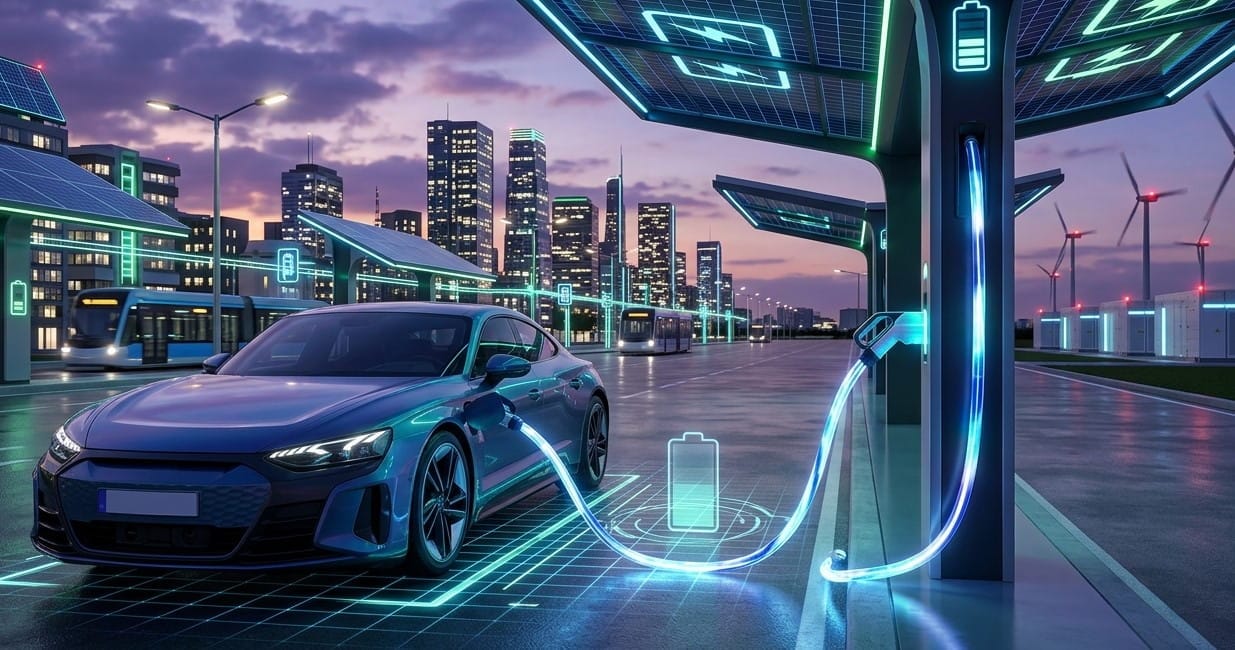
Introduction: Why EV Battery Technology Matters More Than Ever
Electric vehicles are no longer futuristic experiments. They are becoming mainstream transportation, and the battery is the core technology deciding how far an EV can drive, how fast it can charge, how much it costs, and how long it lasts. For years, the biggest concern around electric vehicles has been range anxiety. Drivers want EVs that can travel long distances, recharge quickly, perform well in extreme temperatures, and remain affordable.
The next leap in EV battery technology is not based on one single invention. It is being driven by multiple breakthroughs happening at the same time: improved lithium-ion chemistry, lithium iron phosphate batteries, solid-state batteries, sodium-ion batteries, faster charging architectures, smarter battery management systems, and more efficient vehicle design. Together, these innovations are reshaping what electric vehicles can do.
According to the International Energy Agency, battery innovation is accelerating across several areas, including solid-state, sodium-ion, and other advanced battery technologies. The IEA also reported that lithium-ion battery pack prices fell sharply in 2024, helping automakers push EVs closer to mass-market affordability.
The Current Foundation: Lithium-Ion Batteries
Most EVs today use lithium-ion batteries. These batteries have become the standard because they offer a strong balance of energy density, cycle life, reliability, and manufacturing maturity. In simple terms, lithium-ion batteries can store a large amount of energy in a relatively compact and lightweight pack, making them suitable for passenger vehicles.
However, traditional lithium-ion batteries still have limitations. They can be expensive, they depend on critical minerals such as lithium, nickel, cobalt, and graphite, and they can degrade over time due to heat, repeated fast charging, and deep charge-discharge cycles. This is why the industry is now focused on making batteries that are cheaper, safer, more durable, and more energy-dense.
The future of EV range depends not only on storing more energy but also on using that energy more efficiently. Better battery cells, improved pack design, advanced cooling systems, lightweight materials, aerodynamics, and intelligent software all contribute to longer real-world range.

LFP Batteries: Lower Cost, Longer Life, and Mass-Market EV Growth
One of the biggest shifts in EV battery technology is the rapid rise of lithium iron phosphate, or LFP, batteries. Unlike nickel-rich batteries, LFP batteries do not use nickel or cobalt. This makes them cheaper, more stable, and attractive for mass-market electric vehicles.
LFP batteries generally have lower energy density than nickel manganese cobalt, or NMC, batteries. The IEA notes that LFP battery packs are lower in energy density by mass and volume compared with NMC packs. However, LFP batteries can often be charged to 100% more regularly without the same level of long-term degradation concern, which helps offset some of the practical range difference for everyday drivers.
LFP is becoming especially important because cost is one of the biggest barriers to EV adoption. The IEA reported that LFP batteries accounted for nearly half of the global EV battery market in 2024, with especially high adoption in China.
For consumers, this means the next generation of affordable EVs may not always need the highest possible energy density. Instead, many vehicles will use durable, lower-cost battery packs that deliver practical range, long life, and improved safety.
Solid-State Batteries: The Most Anticipated Breakthrough
Solid-state batteries are widely seen as one of the most important next-generation EV battery technologies. Traditional lithium-ion batteries use liquid electrolytes to move ions between the cathode and anode. Solid-state batteries replace that liquid electrolyte with a solid material.
This change could unlock several advantages. Solid-state batteries may offer higher energy density, faster charging, improved safety, and better thermal stability. Toyota explains that solid-state batteries can allow ions to move faster, supporting shorter charging times, increased cruising range, and higher power output. Toyota also states that these batteries are more stable under high temperature and high voltage conditions.
The promise is significant: smaller battery packs, longer driving range, and faster charging. Toyota has said it is working toward commercialization of all-solid-state batteries for battery electric vehicles in the 2027–2028 timeframe. Its roadmap includes a target of charging from 10% to 80% in 10 minutes or less and improving cruising range compared with its next-generation performance battery.
However, solid-state batteries are not simple to mass-produce. Durability remains a key challenge. Toyota has identified cracking between cathodes, anodes, and solid electrolytes during repeated charging and discharging as a long-standing technical issue. This is why manufacturing quality, electrolyte stability, and material engineering are just as important as the chemistry itself.
Sodium-Ion Batteries: Reducing Dependence on Lithium
Another important development in EV battery technology is the sodium-ion battery. Sodium is more abundant than lithium, which gives it potential advantages in cost stability and supply chain resilience. Sodium-ion batteries may not replace high-performance lithium-ion batteries in every EV, but they could become important for affordable vehicles, short-range city cars, commercial fleets, and energy storage.
The U.S. Department of Energy describes next-generation batteries, including sodium-ion and solid-state designs, as technologies that can improve performance, safety, cost, and reduce reliance on critical materials.
CATL, one of the world’s largest battery manufacturers, announced its Naxtra sodium-ion battery in 2025. The company claims the passenger EV version reaches 175 Wh/kg energy density, offers up to 500 kilometers of range, performs across a wide temperature range, and can deliver over 10,000 cycles. These are manufacturer claims, but they show how quickly sodium-ion technology is moving from laboratory research toward commercial products.
Sodium-ion batteries could be especially useful in cold climates. The IEA notes that sodium-ion technology may offer a cheaper option for batteries in cold conditions, where LFP batteries typically perform less well. However, sodium-ion batteries still need higher energy density or more favorable cost conditions to compete broadly with LFP on price per kWh.
Ultra-Fast Charging: Making EVs Feel More Like Gas Cars
Range is only one side of the EV battery equation. Charging speed is the other. A vehicle with 500 kilometers of range becomes far more practical if it can add hundreds of kilometers in minutes rather than hours.
Fast charging depends on several factors: battery chemistry, internal resistance, thermal management, charger power, pack voltage, and battery management software. Modern EV platforms are moving toward 800V architectures and advanced cooling systems to handle high charging loads more safely.
CATL’s second-generation Shenxing Superfast Charging Battery is an example of how fast-charging EV battery technology is advancing. CATL says the LFP battery supports an 800 km range, a 12C peak charging rate, and peak charging power of 1.3 MW. The company also claims it can charge from 5% to 80% state of charge in 15 minutes at -10°C.
These numbers represent a major direction for the industry: EV batteries are being designed not only for energy capacity but also for high-power charging, low-temperature performance, and real-world convenience.
Battery Management Systems: The Software Behind Better Range
The battery cell gets most of the attention, but software is increasingly important. A battery management system, or BMS, monitors voltage, temperature, current, state of charge, and state of health. It protects the battery from overheating, overcharging, deep discharge, and uneven cell behavior.
Next-generation BMS platforms are becoming more intelligent. They use predictive analytics, real-time diagnostics, and thermal modeling to optimize charging, reduce degradation, and improve safety. In future EVs, AI-driven battery management could help personalize charging behavior based on driving patterns, climate, route planning, and battery age.
For example, an intelligent EV could automatically precondition its battery before reaching a fast charger, limit charging speed when cell temperature is too high, or recommend charging windows that reduce long-term degradation. This kind of software optimization can increase usable range without changing the chemistry of the battery.
Beyond Chemistry: Better Pack Design and Vehicle Efficiency
The next leap in EV range will not come from battery chemistry alone. Automakers are also improving how battery packs are integrated into the vehicle. Cell-to-pack and cell-to-chassis designs reduce unnecessary structural materials, improve packaging efficiency, and allow more active battery material to fit into the same vehicle footprint.
Vehicle efficiency is equally important. Aerodynamics, tire resistance, lightweight materials, heat pumps, regenerative braking, and efficient motors all help an EV travel farther using the same battery capacity. Toyota’s next-generation BEV roadmap, for example, explicitly combines battery improvements with vehicle efficiency measures such as aerodynamics and weight reduction.
This matters because adding a bigger battery is not always the best solution. Bigger packs increase cost, weight, charging time, and material demand. The best EVs of the future will combine high-efficiency design with smarter, lighter, safer battery systems.
The Future of EV Battery Technology
The future of EV batteries will likely be multi-chemistry rather than one-size-fits-all. Affordable city EVs may use LFP or sodium-ion batteries. Long-range premium EVs may use advanced nickel-rich lithium-ion or solid-state batteries. Commercial vehicles may prioritize cycle life, fast charging, and total cost of ownership. Performance EVs may use batteries optimized for high power output and thermal stability.
This multi-chemistry future is already visible. CATL describes the industry as moving into a “multi-power era,” where different battery systems are designed for different use cases rather than forcing every vehicle into the same battery architecture.
The key breakthroughs to watch over the next decade include:
- Commercial solid-state batteries for longer range and faster charging
- Wider adoption of LFP batteries in affordable EVs
- Sodium-ion batteries for cost-sensitive and cold-climate applications
- Ultra-fast charging battery packs with better thermal control
- AI-powered battery management systems
- Cell-to-pack and structural battery integration
- Improved recycling and lower dependence on critical minerals
The Next Leap in Range Is Already Underway
EV battery technology is entering its most important phase yet. The next leap in range will not come from a single miracle battery. It will come from the combined progress of chemistry, manufacturing, software, thermal engineering, vehicle efficiency, and supply chain innovation.
Solid-state batteries could transform premium EVs with higher range and faster charging. LFP batteries are making EVs more affordable and durable. Sodium-ion batteries may reduce dependence on lithium and open new opportunities for low-cost electric mobility. Ultra-fast charging and intelligent battery management will make EV ownership more convenient and reliable.
For drivers, this means the future electric vehicle will be more practical than ever: longer range, shorter charging stops, better safety, lower cost, and longer battery life. For automakers and technology companies, the battery is no longer just a component. It is the strategic center of the electric mobility revolution.
The next generation of EVs will be defined by how intelligently they store, manage, and use energy. That is why EV battery technology is the real engine of the electric future.