

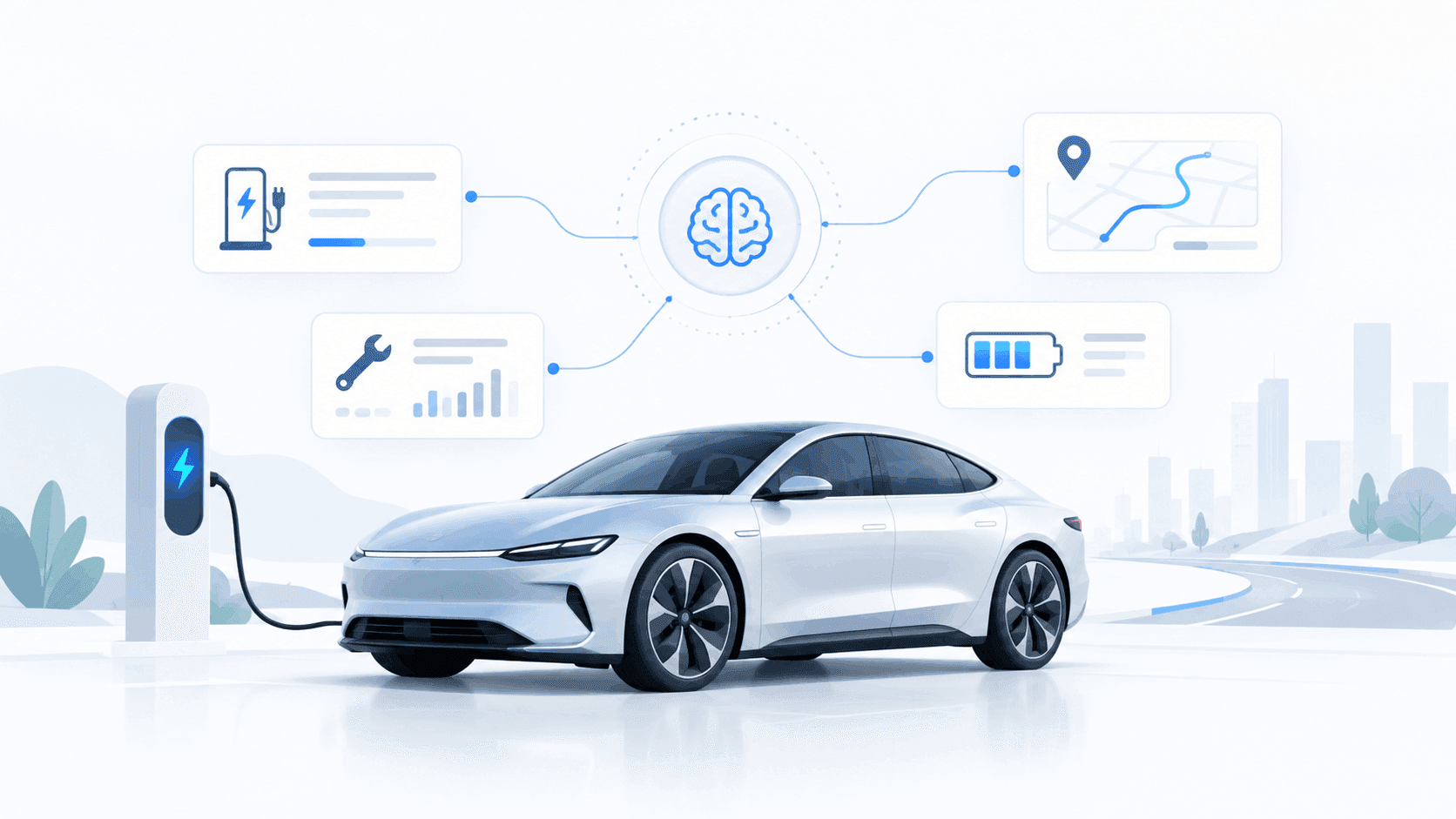
Electricity grids are becoming more complex as electric vehicles, solar panels, wind farms, battery storage, and connected devices are added to the energy system. Traditional grid management was built around relatively predictable electricity generation and demand, but modern energy systems are much more dynamic. This is where AI for smart grids can play an important role.
Artificial intelligence and machine learning can analyze large amounts of energy data, predict electricity demand, forecast renewable energy generation, and help grid operators decide when electric vehicles should charge. Instead of reacting to problems after they happen, AI-powered smart grids can make faster and more informed decisions about how electricity should move across the network.
What Is AI for Smart Grids?
AI for smart grids refers to the use of artificial intelligence and machine learning to monitor, predict, and optimize electricity generation, distribution, and consumption. A smart grid already uses digital technologies such as sensors, smart meters, communication systems, and automated controls. AI adds another layer by identifying patterns in this data and helping the grid respond to changing conditions.
For example, a machine learning system can study historical electricity demand, weather conditions, EV charging patterns, and renewable energy output. It can then predict when demand is likely to increase and help operators prepare the grid in advance.
This becomes increasingly important as electricity systems move away from a small number of centralized power plants toward a mix of distributed energy sources such as rooftop solar, wind farms, batteries, and electric vehicles.
Why Modern Power Grids Need AI
Traditional electricity grids were largely designed around one-way electricity flows. Large power plants generated electricity, transmission networks carried it over long distances, and distribution networks delivered it to homes and businesses.
Modern smart grids are different. A house with solar panels may consume electricity at one moment and send excess electricity back to the grid at another. Electric vehicles create large but flexible loads, while battery systems can store electricity and release it later. Renewable energy sources also introduce variability because solar and wind generation depend on weather conditions.
Managing all of these changes manually is difficult. AI systems can continuously analyze thousands or millions of data points and help operators predict how supply and demand will change throughout the day.
The International Energy Agency notes that AI can help electricity systems forecast demand, renewable energy generation, EV charging behavior, and electricity prices, allowing energy systems to coordinate charging and improve local grid balancing.
Machine Learning for Electricity Demand Forecasting
One of the most useful applications of machine learning in smart grids is electricity demand forecasting. Grid operators need to know how much electricity consumers are likely to use during the next few minutes, hours, or days.
Traditional forecasting methods often rely heavily on historical averages and statistical models. Machine learning can analyze more variables, including temperature, weather forecasts, day of the week, holidays, industrial activity, EV charging behavior, and previous electricity consumption.
With better forecasts, grid operators can prepare generation and storage resources before demand increases. This can reduce the risk of grid congestion and help utilities operate power infrastructure more efficiently.
AI-powered forecasting can become even more valuable as electricity demand changes because of electric vehicles, heat pumps, distributed batteries, and other technologies.
AI and Renewable Energy Forecasting
Renewable energy presents a different challenge because electricity generation can change rapidly. Solar panels produce less electricity when clouds appear, while wind farms depend on changing wind conditions.
Machine learning models can combine weather forecasts with historical generation data and real-time sensor information to estimate how much renewable energy will be available. More accurate predictions allow grid operators to schedule other power sources, storage systems, and flexible electricity loads more effectively.
This can also help reduce renewable energy curtailment. Curtailment occurs when renewable electricity is available but cannot be used because the grid has too much supply or insufficient capacity to move the power where it is needed.
If AI predicts a period of high solar generation, for example, the smart grid could encourage flexible loads such as EV chargers or battery storage systems to consume more electricity during that period.
For a detailed overview of how AI can improve renewable forecasting and smart-grid operations, see the International Energy Agency’s analysis of AI and energy.
How AI Can Balance EV Charging
Electric vehicles can place significant additional demand on local electricity networks, especially if large numbers of vehicles begin charging at the same time. Evening charging is a common example because many drivers return home from work and plug their vehicles in during hours when household electricity consumption may already be high.
AI-powered smart charging can help avoid this problem by determining when an EV actually needs to charge instead of immediately drawing maximum power whenever it is plugged in.
A smart charging system could consider battery level, departure time, electricity prices, grid demand, charger capacity, and expected renewable generation. It could then schedule charging during periods when electricity demand is lower or renewable power is more available.
For example, if a driver plugs in an EV at 6 PM but does not need the vehicle until 7 AM, the system might delay most of the charging until later in the night. If strong wind generation is expected overnight, charging could be shifted toward those hours.
AI Can Coordinate Thousands of EVs
Managing one EV is relatively simple. Managing thousands or millions of electric vehicles connected to the grid is much more complicated.
Machine learning systems can predict when vehicles are likely to connect, how much energy they require, how long they will remain connected, and when drivers typically need them again. This information can help charging networks spread electricity demand across different periods instead of allowing every vehicle to charge simultaneously.
AI can also support fleet charging. Delivery companies, taxi fleets, buses, and commercial vehicle operators may have hundreds of EVs charging at the same depot. An intelligent energy management system can prioritize vehicles based on their schedules and available battery levels instead of charging every vehicle at full power.
This could reduce peak electricity demand while still ensuring that vehicles are ready when they are needed.
Combining EV Charging With Renewable Energy
One of the strongest applications of AI for smart grids is coordinating EV charging with renewable energy production.
Consider a region with a large amount of solar power. Electricity production may peak around midday, while many EV owners normally charge in the evening. AI-enabled charging systems could encourage vehicles connected during the daytime to charge when solar generation is high.
Similarly, charging could be increased during periods of strong wind generation and reduced when renewable electricity production falls.
By matching flexible demand with renewable generation, smart grids can make better use of clean electricity while reducing stress on the network.
This approach can also work with stationary battery storage. When renewable generation exceeds immediate demand, AI systems can decide whether electricity should be stored in grid batteries, used to charge EVs, or exported to another part of the network.
Vehicle-to-Grid Could Add More Flexibility
Smart charging usually controls how quickly and when an electric vehicle receives electricity. Vehicle-to-grid, or V2G, goes further by allowing compatible EVs to send electricity back into the grid.
An EV that spends most of the day parked contains a potentially useful battery. With V2G technology, thousands of connected vehicles could collectively provide temporary energy storage for the electricity network.
AI could determine when it makes sense to charge or discharge each vehicle while considering factors such as battery condition, driver requirements, electricity prices, renewable energy availability, and grid demand.
The IEA says smart and bidirectional charging can provide flexibility by shifting EV charging demand and helping reduce peak loads, although wider V2G adoption still depends on compatible vehicles, infrastructure, regulations, and interoperability.
AI for Grid Fault Detection and Predictive Maintenance
AI can also improve the reliability of electricity infrastructure. Smart grids contain large amounts of operational data from transformers, substations, transmission lines, meters, and other equipment.
Machine learning algorithms can monitor this information for unusual patterns that may indicate developing problems. For example, changes in transformer temperature, voltage, or electrical load could suggest that equipment is beginning to fail.
Predictive maintenance allows utilities to inspect or replace equipment before a major failure occurs. This can reduce outages, maintenance costs, and unexpected disruption.
AI systems can also help identify abnormal grid behavior more quickly, giving operators additional information when responding to faults or extreme weather events.
Challenges of Using AI in Smart Grids
AI does not automatically solve every grid problem. Electricity systems are critical infrastructure, so reliability, cybersecurity, privacy, and human oversight are essential.
AI models also depend heavily on high-quality data. Missing, inaccurate, or biased data can lead to poor predictions. Utilities may also operate older infrastructure that was not originally designed for real-time data collection or AI-based control.
Cybersecurity is another major concern because connecting more devices to the grid increases the number of possible attack points. Smart meters, EV chargers, battery systems, and distributed energy resources all need secure communication and authentication.
For important grid operations, AI systems are therefore more likely to support trained operators and automated control systems rather than independently control every decision.
The Future of AI for Smart Grids
Electricity networks will need to become more flexible as renewable energy, electric vehicles, battery storage, and distributed energy systems continue to expand. Traditional methods alone may struggle to manage millions of devices whose electricity consumption and generation change throughout the day.
AI and machine learning can provide the forecasting and optimization capabilities required to manage this complexity. They can help predict electricity demand, estimate renewable generation, coordinate EV charging, manage energy storage, detect equipment problems, and improve overall grid efficiency.
The relationship between electric vehicles and the grid is especially important. EVs can create significant new electricity demand, but their batteries and flexible charging schedules also create opportunities. With intelligent charging and eventually vehicle-to-grid systems, electric vehicles could become active participants in smart energy networks rather than simply additional loads.
The future of AI for smart grids is therefore not only about making electricity networks more automated. It is about creating energy systems capable of continuously balancing electricity generation, storage, renewable energy, and flexible demand. As machine learning improves, smart grids could become increasingly capable of delivering reliable electricity while supporting the growth of EVs and renewable energy.